
Hello and thanks for reading!
Today’s Writing Tip: History! Or rather the Importance of it.
If you are looking for world-building tips on history, check in next week. This week includes some writing tips on incorporating history into your universe, but the bulk of world-building tips will be next week.
“Those who cannot remember the past are condemned to repeat it.” – George Santayana
I’ll start by saying knowing your world’s history is optional, but highly recommended. Even if your plot has nothing to do with your world’s history, knowing it can make your world feel more lived in. Ruins from an ancient culture that have nothing to do with your story may feel like wasted space, but they create a feeling that this world wasn’t always what it is currently. There was change in your world.
Naturally there should be more to your scene than just ‘oohhh, look there’s ruins here. Look at my beautiful history’ — say for example, your characters hiding in the ruins to escape the police, because your characters vandalized a statue in the town plaza (weirdly specific? Don’t worry, we’ll talk about that statue later) — but there being more to your scene doesn’t mean the ruins themselves have to be plot relevant. In my example, both the ruins and the statue, in of themselves, have no bearing on the plot, but they give the reader a sense of historical setting. You could, of course, give more history in those scenes. Your characters’ reason to vandalize that statue may have been related to the history of the figure in the statue.
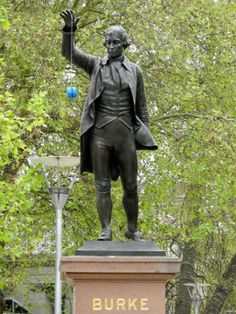
 [I feel like this statue is better with a yoyo than I am]
History has a impact on the social and political climate of the world. Conflicts between countries and cultures are often routed in history, but so are alliances. Even within a country, political leaders and the ruling class have conflicts and alliances that are entrenched in history. Whether you are doing feudalistic nobles, democratic representatives, bureaucratic officials, whomever, your ruling class has lines drawn in the sand. These lines could be from very recent history or from age old history. You can have Romeo’s and Juliet’s age old familial feud, an alliance older than dirt, or an alliance that recently broke apart. Presuming at least part of your story is about the ruling class, then, no matter what you decide on, the history should be considered. This was one example of how political histories can effect the characters, but its worth noting that its not just the upper class effected by political histories. For example, wars are a common effect of conflicts and that effects everyone.
Going back to that statue, our characters just love to vandalize. Social climates often effect whose statues we build. War heroes, prominent politicians, world changing revolutionaries (Florence Nightingale revolutionized medicine as the founder of modern nursing. She has a statue in London), et cetera are often the subjects of statues, but so are events, such as war monuments and major tragedies. This is an easy way to build history into your story, but you can also show characterization and/or the current social climate of your world. Say your characters vandalized a statue representing a controversial war hero. Perhaps this war hero committed genocide of a culture that in modern day is trying to win the same rights as the rest of society. This sends a very different message about your characters than say vandalizing a statue about a major tragedy.
 [More yoyos!]
In my first example — the war hero vandalizing — is a great example of why its important to know the history of your world. This is an example of history having plot relevance, but not necessarily something you are obligated to build. To create a story about social change (which I’m going to go out on a limb and say that’s probably the story we are writing if our characters are vandalizing this particular story, but it doesn’t technically have to be), you don’t need to know that there was a war that nearly wiped out a certain culture — you only need to know that there’s a history of oppression — but adding specifics about the history gives your story an extra level of depth. It gives you a chance to draw your readers into the world. It isn’t there is oppression here, let me show you how they are oppressed in the modern day; it’s this oppression has occurred for a long time, let me show you the history of it.
Of course, history isn’t just about social and political changes, its also about disasters. In this case, while ancient history certainly can effect your story, recent history is more likely to have an effect here. A famine that occurred 10 years has a different effect than a famine 100 years ago, which is very different than a famine that occurred a thousand years ago. 10 years ago, your characters will likely remember and many people will have lost loved ones. The country or culture itself may still be in recovery. A famine that occurred a 100 years ago may not be in living memory anymore (though it may be depending on the lifespan you choose for your races or if humans live long enough that they wouldn’t have been tiny babies when it happened). However, that famine is still going to have effects on modern day – whether through policies that were put in place or how they affected the culture, itself. For example, maybe this is a culture that still explains natural events in myths and stories. This culture would have an explanation for why the famine happened. Perhaps this explanation is the people weren’t religious enough. If they came up with this excuse, what do they do to the people who aren’t religious? An obvious idea is kill the heretics. After all, they can’t risk another famine. This creates a climate of religious intolerance and a climate where perceived heresy is very dangerous. Whereas a famine a thousand years ago – while possible – is unlikely to effect your plot and you may not need to know it.
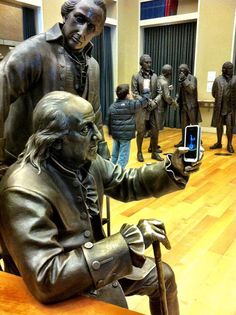 [I may have laughed a little too much at this picture…]
With history, there’s a point where you need to consider whether you need to know the information or not. Certainly, it will create a sense of setting, but do you really need to know that two millennia ago, a farmer discovered that alternating crops produces better results? Unless your main character is a farmer or your story is about farming, probably not. History is a huge topic and its important to have an idea going in, where you are not going to waste your time. That doesn’t mean you shouldn’t build that ruin of an ancient long lost civilization – just that you don’t need to know it was a theocracy and you definitely don’t need to know that the priests were corrupt as fudge. (Fudge isn’t particularly corrupt. I just like to keep things PG. You can figure out what word I actually meant.) Unless, of course, that civilization is plot relevant. In which case, build everything! (Just kidding. Remember, even if its plot relevant, there’s a point of diminishing returns)
As always, remember, in writing there’s no such thing as absolute advise. Enjoy your story and have fun writing! Next week, I’ll be talking about building your history.
 Current Projects